Kangerlussuaq, Greenland · Senne
Polar Circle Marathon: the Greenland ice was billed at minus 15°C, and in 2025 it rained
The next start is October 30, 2027. Despite the official guidance, rain fell on the ice sheet in 2025, followed by snow the next morning. The story of the 42km captured by runners who raced it—and the flight that offers the only way into town.
Step out of a hotel room in Kangerlussuaq, cross the corridor, and the airport terminal is right there. When the two runners behind the Dutch YouTube channel Jens & Joep arrived for the Greenland marathon in October 2025, that was the first thing they pointed out to the camera: a hotel with a walkway straight into the airport was unusual.
Two days later, they stood on the ice sheet, about 40km from the airport by bus. The official website lists race-day temperatures of minus 20 to minus 15 degrees Celsius.
That day, rain fell on the ice sheet and streams ran across the half-melted ice. “We’re running through slush right now.”
The Polar Circle Marathon starts on that ice sheet, just above the Arctic Circle, then covers 42km back to the village beside the airport. The 2026 race takes place on October 24.
Trust the figures in the race information or the rain in the video? Those two days in 2025 make the case for packing for both.
Kangerlussuaq, Greenland
1Race entry with a 5-day package from Copenhagen, starting at €2,895 in 2026
There is effectively no independent route to the Polar Circle Marathon. Kangerlussuaq has neither road nor rail links to other settlements, and Albatros, the Danish tour operator behind the race, sells a 5-day package covering round-trip flights from Copenhagen, 4 nights’ accommodation, local transportation and meals. The 2026 price ranges from €2,895 to €3,395 depending on accommodation, with a separate €350 entry fee for each race distance.
That air link has disappeared before. When an international runway opened in the capital, Nuuk, on November 28, 2024, the Copenhagen–Kangerlussuaq route closed. It did not reopen until 2025.
Air Greenland’s published 2026 schedule runs every Tuesday from February 10 through October 20. In the announcement, the airline’s acting chief commercial officer said the timetable had been designed around both tourism and travel for residents. The marathon package flight comes after that schedule ends, leaving Copenhagen on the morning of Thursday, October 22, and returning on the afternoon of October 26.
The flight takes about 4 hours 30 minutes. Participants arriving from outside Greenland collect a goodie bag containing their bib at Albatros headquarters in Copenhagen on the evening before departure. October 23 is reserved for the course inspection and race briefing, followed by the marathon on October 24 and the half marathon on October 25.
Before reaching the ice sheet, every runner first needs a seat on that flight.
 Polar Circle Marathon 2026Sat, October 24, 2026 · D-26 · Kangerlussuaq, GreenlandSee race details
Kangerlussuaq, Greenland
2A 3km glacier section and an ice wall climbed with a rope
At 7:30 a.m. on race morning, the bus carrying the runner from the Lithuanian YouTube channel Paulius Samoška left the hotel.
The ice sheet was about 40km away. Frozen roads forced the bus to stop once en route, while the rain that had fallen overnight continued throughout the drive. The scheduled 9:30 a.
m. start was pushed back to around 9:50 a.m.
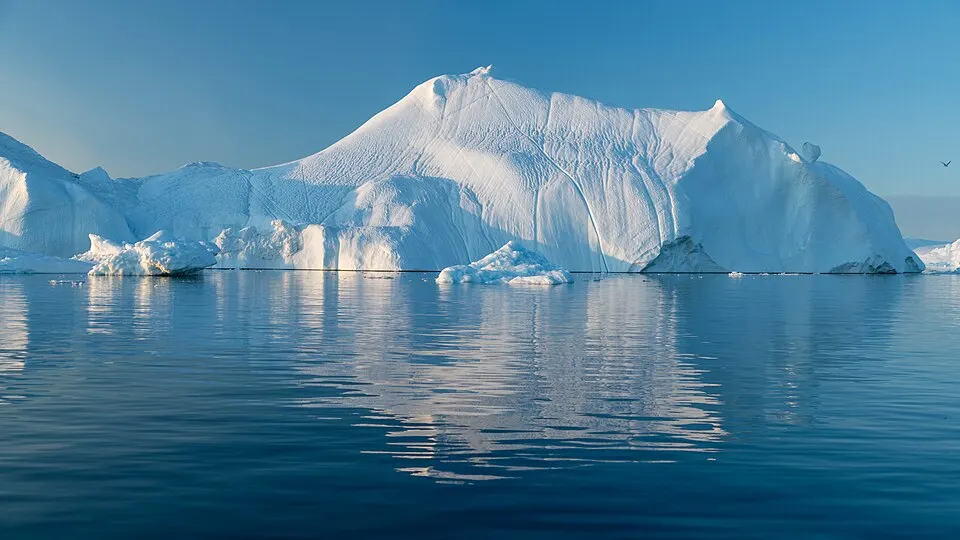
The start line sits on a gravel road just short of the ice sheet. The course climbs over a ridge on a mix of sand and gravel, crosses a small bridge, then reaches the ice. The ice-sheet loop is about 3km.
Its exact length is set shortly before the race, and runners cannot take a single step beyond the route marked by poles and flags. Hidden crevasses lie outside it. During the pre-race inspection, a guide delivered a brief warning in English: “Do not go off the path.
There are areas on both sides. If you fall down, you die.” Shoe spikes are therefore mandatory, while poles are not allowed.
The first 1km was uphill. By 4km, his heart rate had climbed to 176, and he said that was where he felt his limit. The ice wall appeared soon afterward.
Runners hauled themselves up by a rope, then held it again for the descent. A queue formed at the wall. On the same section, the two Dutch runners took 50 minutes to reach 5.5km—a pace slower than 9 minutes per km.
On the ice sheet, the watch gets no attention. All eyes stay on the ankles.
Kangerlussuaq, Greenland
32025 weather: rain despite warnings of minus 15°C
The official race website lists expected race-day temperatures of -20°C to -15°C, with daytime highs between -15°C and -5°C. It also warns that a shift in the wind can dramatically change how cold it feels. 2025 was different.
One of the Jens & Joep runners said on arrival, "It’s usually -15°C here, but on the exact weekend we came, it’s around 0°C." Melting ice means water. After crossing meltwater streams in shoes that were not waterproof, the Lithuanian runner continued with wet feet.
Both Dutch runners had soaked shoes by around 4km. Standing on the ice, one told the camera, "It’s really impossible to run here. You’ll break an ankle."
The other said it felt like being in a dream. By Sunday morning, when the half marathon took place a day later, overnight snow had blanketed the entire village in white. A runner at the start line said it felt much colder than the day before.
Rain or snow, organizers made one rule clear at the briefing: "You will not be allowed to run if you are not dressed properly." Stashing a dry pair of socks in a personal drop bag at 21km or 30km can spare runners from covering the remaining distance with wet feet.
Kangerlussuaq, Greenland
4After the glacier, 32km of gravel and a long descent around 25km
The ice ended around 10km. The Lithuanian runner removed his spikes and an outer layer, then lost about 3 minutes over two stops to clear stones from his shoes. The Dutch runners dropped off their spikes at 11km.
From there, roughly 32km remained to Kangerlussuaq, all on gravel roads through the tundra. Total elevation gain is 526m, with virtually no flat ground. A long climb begins as soon as the course leaves the ice sheet.
The two Dutch runners walked it, settling into a rhythm of eating, walking and running again. "That’s the best thing about an ultra. Eating and walking all day."
Aid stations appear about every 5km, serving water and a warm electrolyte drink. Personal supplies can be left at 10km, 21km and 30km. There are no toilets on the course.
Paulius Samoška’s watch recorded the progression: 15km in 1 hour 53 minutes, 20km in 2 hours 26 minutes, halfway in 2 hours 34 minutes, and 25km in about 3 hours. Then his knees went. He could no longer run the descents, and the sand dunes came next.
He described that section as being like a desert. The Dutch runners also said the roughly 1.5km descent around 25km pounded their legs and knees. The quads spared on the ice sheet eventually pay the price on that downhill after 25km.
Kangerlussuaq, Greenland
5The finish line is outside Polar Lodge; cut-off: 7 hours
At 33km, Paulius Samoška’s watch ticked past 4 hours. With 5km remaining, the village and airport buildings came into view. Passing the airport at 40.5km, the Dutch runners said, "The finish is behind this."
The marathon finish line stands outside Polar Lodge, north of the village. Samoška said several climbs remained just before it, steep enough to walk. He finished in 5 hours 17 minutes, and the medal around his neck bore a dog.
The cut-off is 7 hours. Runners who miss it are driven to the finish area by race staff or a medical vehicle. No intermediate cut-off times are published.
At the briefing, the presenter said doctors patrol the course, while buses or cars follow behind as the aid stations close. There was another warning: runners have returned with frostbite after spending too long running with frozen hands. The men’s course record is 2 hours 53 minutes 45 seconds, set in 2018; the women’s record is 3 hours 34 minutes 34 seconds, set in 2019.
Even a generous 7-hour clock does not make this course easy. In the title of a video posted three days after the race, Paulius Samoška wrote: My first marathon, and my last marathon.
Kangerlussuaq, Greenland
6The half marathon follows the next day; Polar Bear Challenge entry is €500
Runners who follow the marathon with the half marathon the next day earn an additional Polar Bear Challenge medal. The 2026 half marathon starts at 8:30 on Sunday, October 25, has a 4-hour cut-off and finishes at Long Lake. Entry for both races costs €500, which is €200 less than entering them separately.
In 2025, the two Jens & Joep runners took on the challenge. Snow had fallen throughout the night, piling up thickly even on the ice sheet, and clumps packed beneath their spikes. "It felt like running in high heels."
Both fell on the ice. One finished 3rd in the half marathon. They said the winner had also won the marathon the day before.
The other said his hip was wrecked after the finish. Their later video carried the title: "We thought we were fit until we tried this marathon." If you take on the challenge, run the marathon like a sightseeing trip and save what is left for the ice on day two.
Editor's pick
This is not a race to choose with a results sheet in hand. There is 526m of elevation gain, 3km on the ice sheet, an ice wall climbed with a rope, and weather that switched from rain to snow in the space of a day. On a course where the men’s record stands at 2 hours 53 minutes, there is little reason to chase the clock.
The Polar Circle Marathon places a 42km race inside a 5-day trip. An evening in Copenhagen, a hotel attached to the airport, a pre-race visit to the ice sheet and a finish-line barbecue all form part of the itinerary. For runners with several marathons behind them but no Arctic race experience, three things make this one manageable: a 7-hour cut-off, a vehicle to collect anyone who runs over time, and hot drinks every 5km.
First-time marathoners should start with the half. It offers a chance to set foot on the ice sheet within a 4-hour cut-off, leaving the full marathon for the following year. Anyone coming for the northern lights should lower expectations.
The 2025 aurora tour for the two Dutch runners was canceled, and the webcam they watched through the night showed nothing but cloud. This trip promises the ice sheet, the tundra and 42km back to the airport. Nothing more.
The 2026 race takes place on October 24, and entries have already closed under a rule that shuts registration one month before the package departure. The next races are Saturday, October 30, and Sunday, October 31, 2027.
When the 2027 package is released, check the flight dates before the hotel category.
Entry period · Accommodation
| Races | Itinerary | Entry period | INFO. |
|---|---|---|---|
| Polar Circle Marathon 2026 | Sat, October 24, 2026 | — ~ Tue, September 22, 2026 | Accommodation · See race details |
Auto-translate on · Official race site