Osaka, Japan · Blot
Osaka Marathon 2027: What to Wear When the Normal High Is 12.1°C—and Last Time It Hit 21.4°C
The start is in front of the Osaka Prefectural Government Building; the finish is inside Osaka Castle Park. Dotonbori lies between them. The day runs from 9:15, when 34,000 runners set off, to 16:15, when the course closes. The route unfolds in the order of course. The equipment decision starts with the running location and the time of day.
At 9:15, in front of the Osaka Prefectural Government Building, Wave 1 sets off, followed by Waves 2 and 3. At 10:30, the 720 Naniwa Marathon begins.
Of the 34,000 places, 31,970 are for the marathon, 2,030 for the 720 Naniwa Marathon and 30 for the wheelchair division. When applications exceeded capacity, places were allocated by lottery.
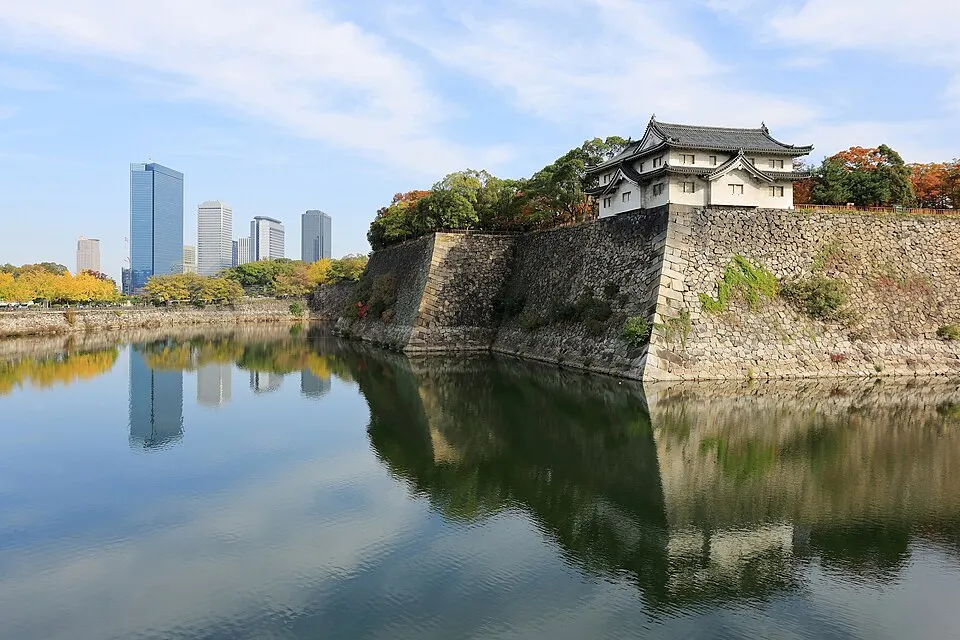
Course starts in front of the Osaka Prefectural Government Building, passes through Dotonbori and finishes inside Osaka Castle Park. The course uses the city center for the full 42.195km.
The recorded coordinates are 34.686 north latitude and 135.520 east longitude, in the Osaka Castle area. Out through the city, then back to the castle.
The day's other variable is temperature. Osaka's normal values for February 28 are a daily high of 12.1 degrees and a daily low of 4.4 degrees (Japan Meteorological Agency, 1991–2020 normals).
At the previous race, however, the daily high reached 21.4 degrees on February 22, 2026. On February 8 of the same year, the high was 5.6 degrees.
That is a 15.8-degree swing within a single month. So the first decision is not what to wear.
It is what to discard, and where. From 9:15 at the Osaka Prefectural Government Building to 16:15 at Osaka Castle Park, the day is best understood in the order of course.
Osaka, Japan
1Start at 9:15 outside the Osaka Prefectural Government Office, with a 7-Hour Cut-Off
The race starts in front of the Osaka Prefectural Government Office. Wave 1 goes off at 9:15, followed by Waves 2 and 3. At 10:30, the 720〈Naniwa〉 Marathon (wheelchair division) starts.
The field is capped at 34,000 runners: 31,970 in the marathon and 2,030 in the 720〈Naniwa〉 Marathon, including 30 wheelchair competitors. The guidelines list the date as February 28, 2027, with a 9:15 start, a 16:15 finish cutoff and a time limit 7-hour limit. The entry fee is 16,000 yen, or 145 U.
S. dollars for overseas entrants. Registration runs from 10:00 on July 28, 2026, through 17:00 on August 28; if entries exceed capacity, runners will be selected by lottery.
The starting area in front of the prefectural office at 9:15 will certainly be cooler than the day’s high. The normal daily high of 12.1 degrees is recorded in the afternoon; the normal low of 4.4 degrees occurs around dawn, and the daily mean is 8.0 degrees. The starting area will not be 12.1 degrees.
The 7-hour limit means taking the full day on the course. A runner finishing in 4 hours will cross the line at 13:15, roughly when the day’s temperature peaks. A runner using the full 7 hours will return to Osaka Castle Park at 16:15, as temperatures begin to fall.
The same course can produce different answers when finish times are 3 hours apart.
 Osaka Marathon 2027Sun, February 28, 2027 · D-107 · Osaka, JapanSee race details
Osaka, Japan
2From Dotonbori to Osaka Castle Park: Cut-Off Times at 10 Checkpoints
This is a look at course. The race starts in front of the Osaka Prefectural Government Office, runs through Dotonbori, and finishes inside Osaka Castle Park. Dotonbori seen on a sightseeing walk is not the same Dotonbori passed at 6 minutes per kilometer.
The official website has published the 2027 course map, which shows how this race cuts through central Osaka. The cut-off point times show where that route falls during the day. The 2026 race had 10 cut-off point checkpoints: 5.0km at 10:44, 11.8km at 11:44, 16.5km at 12:26, 22.6km at 13:19, 25.6km at 13:46, 30.5km at 14:29, 34.2km at 15:02, 37.4km at 15:30, 39.4km at 15:48, and 41.4km at 16:07.
Set side by side, the shape of the day becomes clear. The first 5.0km allows 1 hour 29 minutes, while the stretch from 41.4km to the finish allows only 8 minutes. The window starts wide and narrows toward the end.
The day's high temperature usually arrives in the 13:00 hour. For runners around 4 hours, that falls at the finish; for runners in the 5-hour range, it comes just before the 30.5km cut-off point. The place on the course that coincides with the day's temperature peak therefore varies by runner.
All of the cut-off point times above are from the 2026 race. The 2027 edition has not yet been announced.
Osaka, Japan
3Average High of 12.1°C, Compared with 21.4°C on Race Day in 2026
Viewed by month, Osaka in February has a daily high of 10.5 degrees, a daily low of 3.2 degrees and 60.5mm of precipitation. In March, the daily high rises to 14.2 degrees. February 28 sits at that seasonal boundary.
The 30-year averages for the date are a high of 12.1 degrees, a low of 4.4 degrees and a daily mean of 8.0 degrees. The issue is the range around those averages. In February 2026, Osaka’s highest daily temperature was 21.4 degrees on the 22nd—and that was race day.
The low was 8.0 degrees and the daily mean was 15.1 degrees. On the 8th of the same month, the high reached only 5.6 degrees. The difference was 15.8 degrees.
Normal values cannot fill in that range. They can only define the range of clothing to pack. A February 28 with conditions mild enough for a single short-sleeve shirt and one requiring gloves are both plausible.
Pack for both, then settle on race-day clothing using the forecast one week before the race. By late February, a forecast at that distance provides useful detail. The opposite approach—deciding that February means cold and packing accordingly—is the one most likely to miss.
At 21.4 degrees, winter tights are not the right choice for 42.195km.
Osaka, Japan
4Changing rooms close at 8:30, leaving runners outside for 45 minutes before the start
The most overlooked part of full marathon gear is the time before the start. The 2026 race information packet gave two instructions about the changing rooms: “The changing rooms may not be used as waiting areas before the start,” and “The changing rooms close at 8:30.” Bags for the 720〈Naniwa〉 Marathon (running division) begin moving by transport truck to the finish area at 8:30.
That leaves at least the final 45 minutes before the 9:15 start to be spent outside in the starting corral. In a normal year, those 45 minutes are several degrees cooler than the 12.1-degree daily high. Checked baggage also comes with restrictions.
Bags must fit inside the designated bag issued at registration. Items that do not fit, valuables, breakables, long umbrellas and hazardous materials cannot be checked. Even when rain is forecast, a long umbrella cannot go into the bag.
Male runners collect their bags from locations distributed throughout Osaka Castle Park; female runners collect theirs at Osaka-jo Hall. Runners without checked bags do not pass through the changing rooms and instead follow the route shown on the start-area map directly to their corrals. The information above comes from the 2026 race packet.
The times and locations for 2027 will need to be confirmed after the guidelines are published.
Osaka, Japan
5Warm clothing discarded before the start will be collected for recycling, not returned
Cold-weather clothing is collected at the start and along the course. As part of an official sponsor initiative, outerwear is collected for recycling and is not returned. Beginning with the 2026 race, collection boxes for outerwear other than ponchos were also placed at the start.
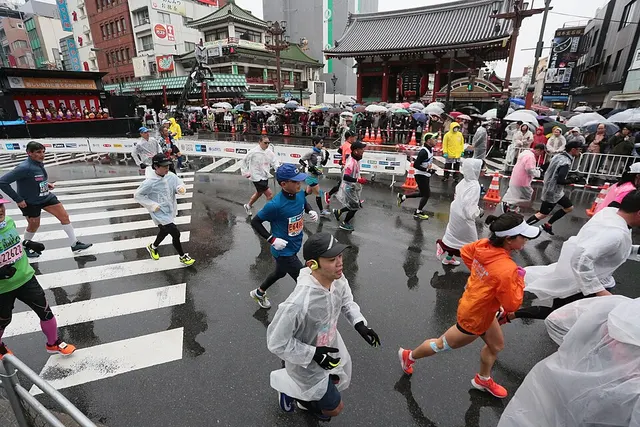
The distinctions are specific. Makeshift ponchos made from plastic bags go in the trash; commercially made ponchos are collected. The race packet states: “For protection from the cold while waiting until the start, please wear an outer layer or other clothing that is no longer needed.”
In other words, lining up in the corral wearing a layer intended for disposal is an anticipated part of the race-day routine. The packing list in the race packet follows the same logic: an outer layer for protection from cold and rain, a poncho, a cap, arm sleeves, gloves and petroleum jelly. It also calls for money or a transit IC card to cover emergency transportation costs if a runner drops out and cannot board a sweep bus, then needs to return by public transit.
Race bibs are collected at the EXPO. The 2027 EXPO will be held at INTEX Osaka; the 2026 edition ran from 11:00–19:30 on February 20 (Friday) and 10:00–18:30 on February 21 (Saturday). Runners must collect their own bibs with photo identification.
Proxy collection and same-day issuance are not available.
Osaka, Japan
6Three Gear Setups Based on the Forecast High
Use the forecast daily high to divide conditions into 3 bands. Daily high of 8 degrees or lower. The 45 minutes in the corral will draw down body heat.
A long-sleeve top, gloves and arm sleeves, topped with a disposable outer layer, are the baseline. Runners using the full 7 hours must also account for temperatures beginning to fall in the 16:00 hour. The few minutes spent collecting a bag in Osaka Castle Park after the finish will feel colder, too.
Daily high of 10–13 degrees, the normal range. Conditions on the course should be manageable. Short sleeves or long sleeves will not change the result.
The key is staying warm in the corral, a job handled by the disposable layer. For runners around 4 hours, the 13:00 high arrives near the finish; for runners in the 5-hour range, it falls around the 30km mark. Daily high above 15 degrees.
This was the range in 2026, when the temperature reached 21.4 degrees. A lightweight short-sleeve top, a hat and earlier hydration become more relevant. The winter gear packed because this is a February race may remain untouched.
The gap between the 8.0-degree low and the 21.4-degree high is 13.4 degrees: a day that is cold at the start but not later on. Rain is a separate consideration. February’s normal precipitation is 60.5mm.
Long umbrellas cannot be checked, and makeshift ponchos are not collected. Count on 1 commercial poncho in addition to the disposable outer layer.
Osaka, Japan
7The post-finish area is outdoors, so pack 1 dry layer in the gear bag
The finish is inside Osaka Castle Park, not under a roof. After crossing the line, runners move through the finish towel, finish drink, baggage claim and changing area in that order. A runner finishing at 16:15 will be outside in the park, wearing sweat-soaked clothes, as temperatures begin to fall after the 12.1-degree daily high.
The heat generated by running is gone. What matters now is the dry layer packed in the bag; the outer layer discarded in front of the Osaka Prefectural Government Office is, naturally, gone. Finish-area protection from the cold must be planned separately from start-area protection.
The baggage-return system changes from year to year. In 2026, the race substantially expanded the baggage-claim counters, with bags stored in organized rolling cage carts. Male runners collected bags from locations distributed throughout Osaka Castle Park.
Return points were separated by finish-time blocks to reduce waiting during the busiest period. Female runners collected their bags at Osaka-jo Hall. Large bags should not be brought to the race in the first place.
The official FAQ recommends leaving them at the accommodation or sending them from a convenience store. The bag should contain only what is needed after the finish.
Editor's pick
The strength of this course is that the running window falls before the day's temperature peak. A 9:15 start places the first half ahead of the afternoon high. The normal high of 12.1 degrees is not excessive for full marathon.
The route through Dotonbori and back to Osaka Castle Park can be run in conditions that are neither too cold nor too hot. But this is not a race where clothing can be settled with one decision. The 45 minutes spent lining up and the 3–7 hours spent running demand entirely different levels of insulation.
The answer is to use normal values for the contents of the gear bag, the forecast from one week before the race for what is worn, and one discardable layer to bridge the two. Since the changing rooms close at 8:30, standing in clothes that will feel unbearable to remove at corral is the costliest option. Of the 7 hours purchased with the 16,000-yen entry fee, the first 45 minutes are one of the few variables a runner can control.
A runner targeting the 3-hour range and one using all 7 hours will experience the same Dotonbori in different temperatures. The plan starts there.
Two things remain. First, wait for the race information packet.
The race guidelines, issued in July 2026, confirm the date—February 28, 2027—the 9:15 start, the 16:15 finish cutoff and the time limit 7-hour limit. The cut-off point times and the gear check times, however, will appear in the race information packet released shortly before race day.
The 10 cut-off point times listed here are from the 2026 race; the 2027 schedule has not been released. Second, mark the calendar for around February 21, when the weekly forecast for Osaka should be checked.
The normal high of 12.1 degrees will be superseded by the forecast for race week. Dotonbori and Osaka Castle Park will not move, but the temperature on race day will be different every year.
Entry period · Accommodation
| Races | Itinerary | Entry period | INFO. |
|---|---|---|---|
| Osaka Marathon 2027 | Sun, February 28, 2027 | Tue, July 28, 2026 ~ Fri, August 28, 2026 | Accommodation · See race details |
Auto-translate on · Official race site