Tokyo · Ian
“Who’s Running the Tokyo Marathon Next Year?” 3 Things to Sort Out Now
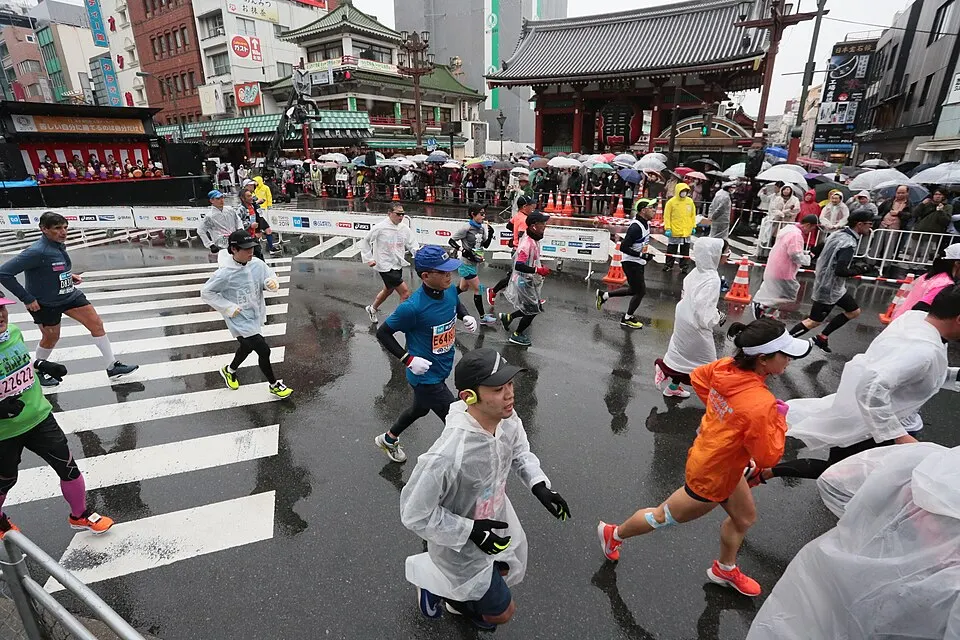
On March 7, 2027, 40,000 runners will line up for the 20th Tokyo Marathon. Bib pickup closes at 5:30 p.m. on March 6, prerace mornings typically sit at 2–4°C (about 36–39°F), and the last corral won't cross the start line until 30 minutes after the gun. The decisions to make now: when to arrive, how to handle race morning, and how the course cutoffs work.
At the 2026 Tokyo Marathon, one runner started a first marathon from the very last corral, Block K. The runner behind the YouTube channel Running in Japan passed the 5:30 pacer, then the 5:00 pacer, and eventually caught the 4:30 pacer.
But at 40K, the runner looked back and saw the 5:30 pacer's flag right behind once again. At 9:10 a.
m. on March 7, 2027, the 20th Tokyo Marathon will start outside the Tokyo Metropolitan Government Building.
The field will be the largest in race history at 40,000, and finishers will receive a 20th-anniversary medal. If you won a spot in the lottery and paid ¥19,800 by September 30—or $230 through international entry—open your calendar before your training plan.
Bib pickup closes at 5:30 p.m.
the day before the race, and there's no proxy pickup. Race morning means a security line at 2–4°C (about 36–39°F).
And for runners in the later corrals, is the clock really seven hours? That's where the three things to prepare now come from.
1Book the Flight Backward From 5:30 p.m. on March 6
Tokyo Marathon bibs are issued only in the South Exhibition Halls at Tokyo Big Sight. Pickup runs from 10 a.m.
to 8:30 p.m. on March 4 and 5, and until 5:30 p.
m. on March 6. There is no race-day pickup.
You must go in person with photo ID and your registration QR code; proxy pickup is not allowed. The wristband put on at pickup has to stay on through the finish line. Book your flight by working backward from that 5:30 p.
m. deadline on March 6. The usual plan of arriving Saturday night and running Sunday morning doesn't work in Tokyo.
Tokyo Big Sight is in Ariake on Tokyo Bay, so it takes a separate trip from Shinjuku or Tokyo Station, and putting the expo off until the crowded final afternoon cuts your margin even more. Make March 5 your arrival date. Don't linger at the expo.
The Block K runner spent three to four hours on the upper floor, which ASICS takes up entirely, before discovering another hall downstairs—and was already worn out from the walking alone. Spend the whole afternoon two days before the race at the expo, and that fatigue follows you to the start line. If you're traveling with others, pick a meeting point first.
Only runners can enter the bib pickup area. The runner behind the YouTube channel Shervin Shares, who ran Tokyo as a fifth World Marathon Major, got separated from family there. Shevs, running a first marathon, found the pickup lines split by gender.
Agree in advance to meet at the expo exit.
 TOKYO MARATHON 2027Sun, March 7, 2027 · D-149 · Tokyo, JapanSee race details
2Walk to the Start, Carry No Water Bottle, Wear a Throwaway Layer
The Tokyo Marathon is a point-to-point course, starting outside the Tokyo Metropolitan Government Building in Shinjuku and finishing on Gyoko-dori in front of Tokyo Station. After the finish, Nijubashimae Station on the Chiyoda Line is closest to the finish gate, and Otemachi Station or Exit 3 of Sakuradamon Station (about an 8-minute walk) also work. Getting back in the evening will sort itself out.
The morning is what matters. There's one catch: Tochomae Station on the Toei Oedo Line, which connects directly to the start area, can't be used as an exit on race day. Official guidance tells runners to walk from the west exit of JR Shinjuku Station or to use Seibu-Shinjuku or Nishi-shinjuku-gochome Station.
From the west exit, the start area is a little over 10 minutes on foot—10 minutes of tens of thousands of people walking the same way. “The subways in Japan are mazes,” is how the Shervin Shares runner remembers it. The runner lost the group while hunting for the right gate number.
That number is printed on your bib. The runner behind the YouTube channel Run the Rising Sun, racing Tokyo for the second time, knew Shinjuku Station is always packed on race morning and used the restroom one station earlier. The Block K runner simply booked a room near the start and walked over.
Official partner Kinki Nippon Tourist (KNT) has been taking bookings for runner accommodation packages since September 18, but they're lodging only—no race entry included. The morning air is cold. In the first week of March, Tokyo's typical morning low is 2–4°C (about 36–39°F), with daytime highs of 10–12°C (50–54°F).
The wait for the 9:10 a.m. start falls close to the coldest part of the day.
Shevs told the camera it was around 6°C (about 43°F) that morning, with hands shaking. With the sun out, the Run the Rising Sun runner skipped the disposable poncho—and regretted it a little while standing and waiting. Bring a throwaway layer whatever the forecast.
There are clothing collection bins just before the start. For the Run the Rising Sun runner, “Security at the gate was stricter than I expected.” The Block K runner's video also notes that bottles with liquid in them are taken at the security gate.
Gear check accepts only the official bag handed out by the race. With 40,000 runners clearing security and bag drop before entering their corrals, plan on standing for close to an hour. So here's the morning order: Drink water at your hotel.
Hit the restroom once outside the gate and again right before entering your corral. Wear your extra layer and drop it in a collection bin. And stay in west Shinjuku, within walking distance of the start.
3Look Past the 7-Hour Limit to the Last Runner’s Timetable
The Tokyo Marathon has a seven-hour time limit, with the finish gate closing at 4:10 p.m. On paper, that's 9:57 per kilometer—a pace you can hit walking briskly.
But that math applies only to runners who cross the start line at 9:10 a.m. The official course guide lists the “estimated passing time of the last runner” at each point.
That's the real timetable. The last runner crosses the start line at 9:40 a.m.
, 30 minutes after the gun. From there: 12:46 p.m.
at halfway, 2:06 p.m. at 30K, 2:48 p.
m. at 35K, 3:40 p.m.
at 40K, and 4:10 p.m. at the finish.
A runner starting at 9:40 has 6 hours 30 minutes, or about 9:15 per kilometer. The Block K runner lived that timetable. A race spent reeling in pacers turned into a walk at 32K, when the legs went heavy.
At 40K, the 5:30 pacer's flag was right behind again. Over the last 2K, the runner made it to the finish on one goal alone: don't let that flag pass. The 2026 race had 38,472 marathon starters and 37,268 finishers, a finish rate of 96.9 percent.
Is it a forgiving race? By the numbers, yes. Still, if you're in a late corral, build your training around 6 hours 30 minutes.
The 2027 cutoffs for each section will be released shortly before the race; when you get them, start by recalculating from your corral's projected start time.
4Beating the 6:30 Clock: The First 5K and the 8K From Hibiya to Tamachi
From the Tokyo Metropolitan Government Building, the course runs through Iidabashi, Kanda, and Nihonbashi before making its first turnaround at Ueno-hirokoji, at 10.6K. As the course heads through Kuramae and Komagata toward Asakusa, Tokyo Skytree appears straight ahead. The second turnaround comes at Tomioka Hachimangu, at 23.95K.
After Ginza, the course heads south toward Shiba Park, makes its last turn in front of Tamachi Station at 37.5K, and comes back to Hibiya, passing the Wadakuramon intersection on the way to the finish. The aid stations come with one rule. According to the Shervin Shares runner, you couldn't take the bottles away from the aid stations; you had to pour the water into your own bottle or drink it on the spot.
That runner carried one empty bottle and refilled it along the way. Only bottles with liquid in them are confiscated at the gate, so if you usually run with a bottle, bring an empty one. Past the finish line, a medal, a poncho, an electrolyte drink, and water are waiting.
A complaint the Run the Rising Sun runner remembered from past years—no drinks at the finish—wasn't an issue this time. Total elevation gain is only 35–40 meters (about 115–130 feet). But the start is a gentle downhill, so the breathing feels easy while the watch runs ahead of plan.
In 2023, the Run the Rising Sun runner's quads were already hurting by about 25K. This time, the runner went slower than 5:00 per kilometer early and focused on landing softly, and the legs were still fine at 25K. The surprise was the short climbs over the bridges across the Sumida River—unexpectedly tough on a course that looks flat.
The highlight of the second half is the roughly 8K out-and-back between Hibiya and Tamachi. For that runner, this was the stretch where “the crowds are huge and the energy is incredible.” After the final turn at the Hibiya intersection, the crowds reminded the runner of Central Park South at the New York City Marathon.
But the 1K-plus from there to the finish on Gyoko-dori was far longer than remembered. That's why you hold back on purpose over the first 5K, with one eye on your watch.
5No Entry Yet? 3 Doors That Close in October
If you want a Japanese marathon in spring 2027, the Osaka Marathon on February 28, one week before Tokyo, has 1,000 first-come, first-served charity entry spots open until 5 p.m. on October 19.
If you're aiming for 2028, registration for Round 6 of the RUN as ONE - GLOBAL Virtual Run Series closes at 5 p.m. Japan time on October 12.
Complete a half-marathon distance in the app between October 17 and 25, and you're in a drawing in which 30 finishers get guaranteed entry to the 2028 race. The entry fee is paid separately. The closest door to Tokyo 2027 shuts on October 13.
The 20th-anniversary campaign Interview Relay 2027 is collecting stories and photos about how the Tokyo Marathon has changed people's lives, and 10 Story Award winners will get 2027 entries. Eligibility differs by award and is listed on the campaign page, so first check whether overseas residents can apply.
Editor's pick
For Tokyo runners, the plan right now comes down to three lines on the calendar: Arrive March 5. Get to Tokyo Big Sight before 5:30 p.m.
on March 6. On the morning of March 7, walk to the start from west Shinjuku, without a water bottle. If you're in a late corral, build the race plan around 6 hours 30 minutes.
Once those lines are set, all that's left is training. If training had to focus on one thing, it would be the first 5K. The legs you save on that downhill get spent in the roar over the 8K from Hibiya to Tamachi—and over a final 1K that runs longer than you remember.
The Block K runner held off the 5:30 flag over those same final 2K.
Have an entry? Book a March 5 arrival first.
Don't have one yet? Get your application in for “Interview Relay 2027” before it closes October 13.
Entry period · Accommodation
| Races | Itinerary | Entry period | INFO. |
|---|---|---|---|
| TOKYO MARATHON 2027 | Sun, March 7, 2027 | Fri, August 14, 2026 ~ Fri, August 28, 2026 | Accommodation · See race details |
Auto-translate on · Official race site
More stories
 December marathons in Southeast Asia: Singapore costs the most of seven, Chiang Mai has no ballot
 World Marathon Majors by Course: Tokyo and Chicago for Time, Sydney for the View
 TCS New York City Marathon Entry: Five Ways In Besides the Drawing
 Marathon registration beyond the Majors: how eight Platinum Label races let you in